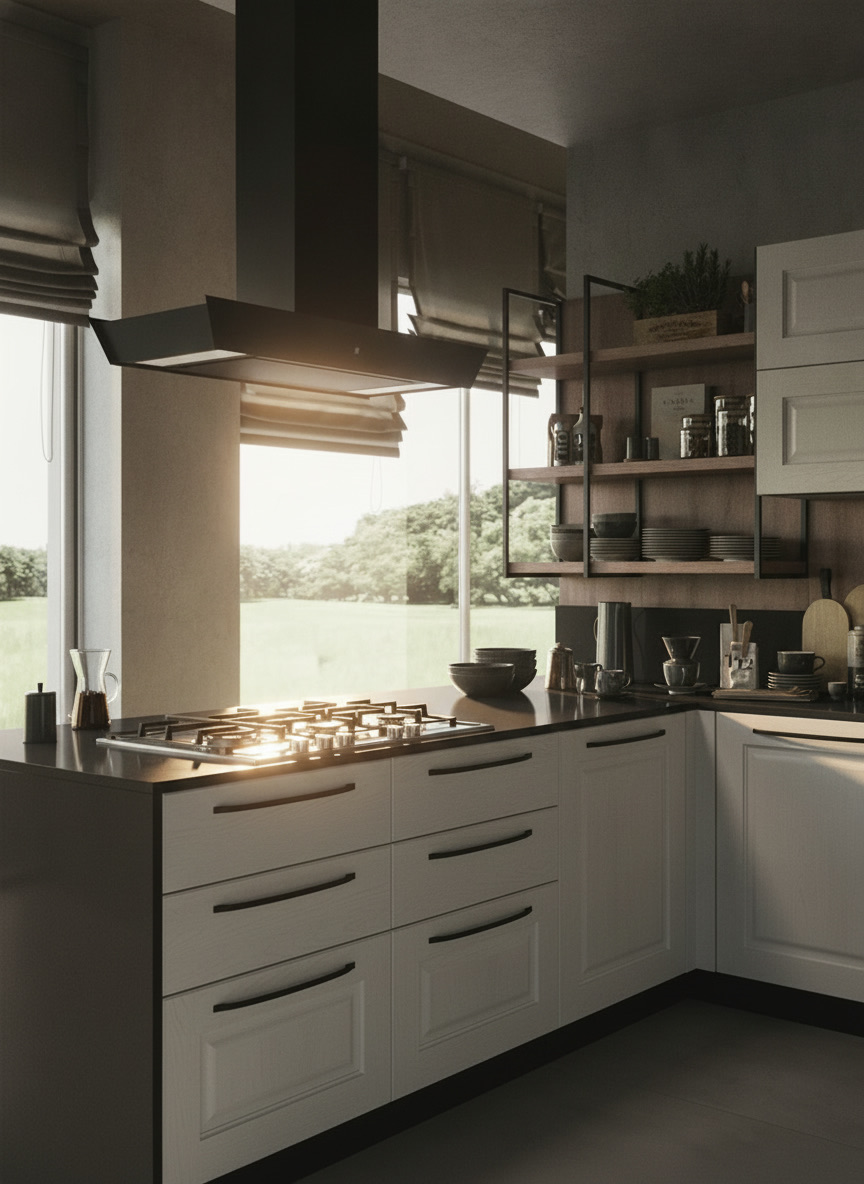
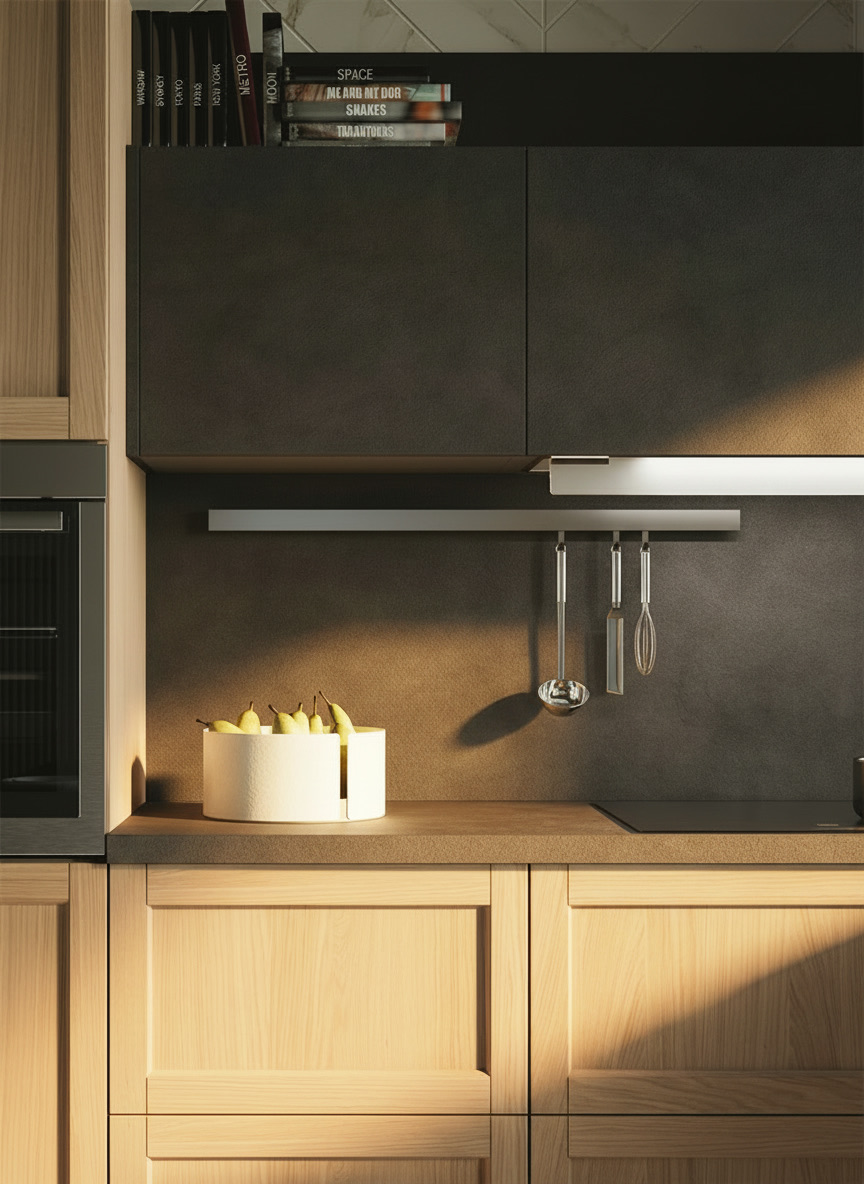
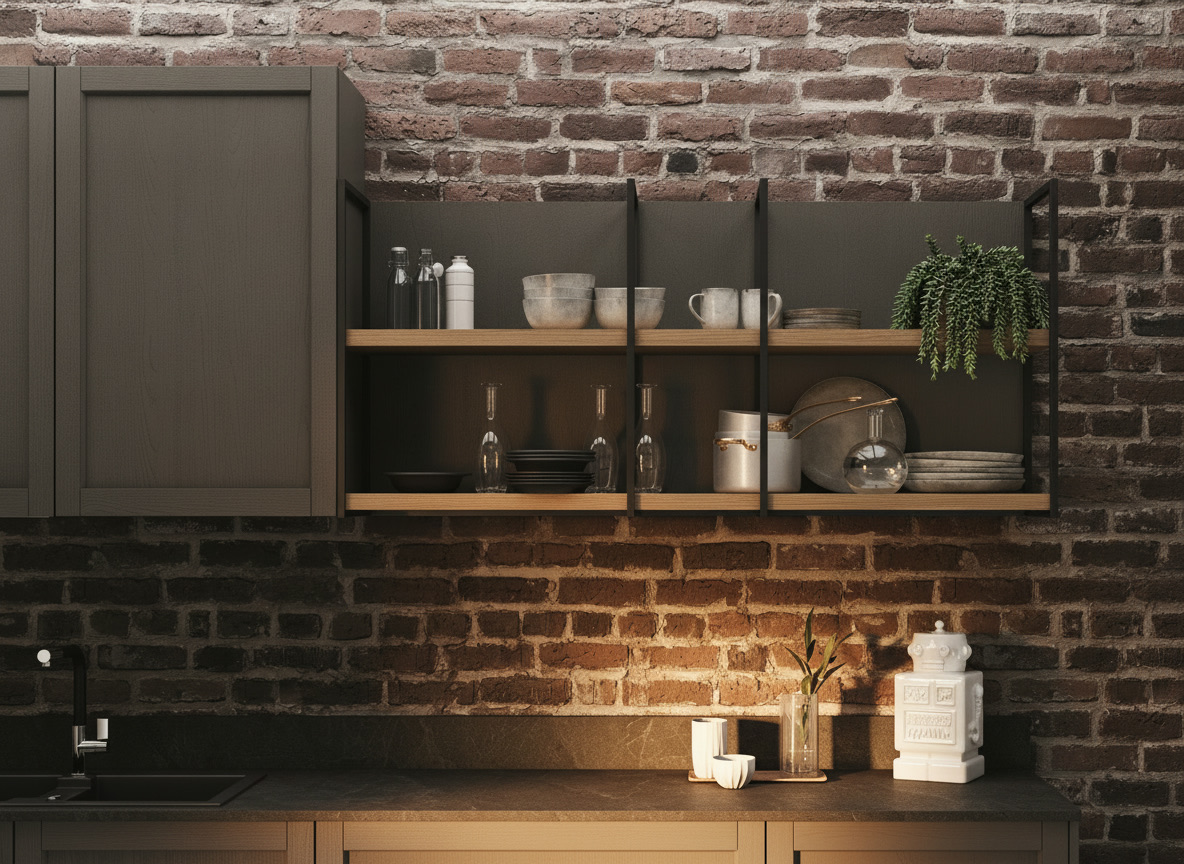
The price of a masonry kitchen depends on six factors: the linear metres and the shape, the worktop, the doors, the appliances, the services, and whether it stands indoors or in the garden. Two of them carry a sub-item that is priced separately in the quote: the structure, which is decided together with the metres and the shape, and installation and distance, which are decided together with the position. Each factor is decided with you and appears in the quote with its own weight.
1. Linear metres, shape and structure
"How much does a three-metre masonry kitchen cost?" is everyone's first question. Metres matter, but on their own they are not enough: a straight three-metre run with two bays and a simple worktop is one thing; the same length in an L-shape, with an island or a peninsula, is another, because the blocks, the uprights, the worktops to cut and the corners to work all increase. The island and the peninsula add an extra worktop, often with a sink or hob, and services to bring to the middle of the room. The measurements to start from are on the page about layouts: small, corner, island or peninsula.
Sub-item: the structure. This is where you decide what you are really buying. Under the same name, online, you find three different things: a low wall of bricks or aerated concrete blocks bound with mortar and plastered, built by a bricklayer; a cabinet in plywood or plasterboard with a cladding, sold as "faux masonry"; and the Michelessi structure in blocks of refractory stone fitted dry, with no mortar and no cement. With masonry you pay for a building site: bricklayer, tiler, joiner, days of wet work and drying. With faux masonry you pay for a cabinet. With stone blocks you pay for the stone and for the workshop that cuts it to size; installation is clean, with no water in the house, and every block remains replaceable. The differences, with facts and sources, are on the pages masonry vs refractory stone and faux masonry kitchens.
2. The worktop: marble, granite, quartzite, sintered stone or travertine
The worktop is the part you see and touch every day, and it is the most variable item in the quote. The stone matters: Calacatta does not cost the same as Botticino or travertine, and granite or quartzite do not cost the same as sintered stone. The thickness of the slab, the length without joins, the edge profile, the cut-outs for sink and hob, the upstand and the sink integrated in the same stone all count. In the Aprilia workshop the slabs are chosen one by one, in front of you: it is the way to know exactly what you are paying for. The stones are described on the marbles and natural stones pages; for outdoors, the notes on marble are on the stone kitchen page.
3. Wooden doors and drawers
Doors are an item that often surprises people. A flat door in pale wood on simple hinges and a framed door in solid walnut or chestnut with drawers, pull-out baskets and soft-close do not cost the same, nor do they involve the same work: drawers and pull-out baskets are, according to those who have already built a masonry kitchen, the heaviest expense among the interiors. Timbers and door types are on the page about masonry and wood and on the one about doors, hinges and finishes.
4. Appliances and housings
In a bespoke kitchen the appliances are chosen before, not after: the recesses are cut to their dimensions and to the manufacturer's ventilation clearances. A built-in oven, dishwasher and fridge want precise housings, grilles and, for the fridge, a vent. The appliances may be yours or supplied with the kitchen: in the quote they are a separate item, so you see how much is the kitchen and how much is the machines.
5. Services and building work in the house
Water, drainage, gas, electricity and the extractor hood must reach where the new kitchen wants them. If they stay where they are, the item is small; if the sink goes on the island or the hob changes wall, you need chases, pipes, an electrician and sometimes a building notification. This work is not done by the stonemason: in the Michelessi quote it is listed as work for your own plumber and electrician, coordinated with them so that the kitchen arrives when the connections are ready.
6. Indoors or in the garden, with installation and distance
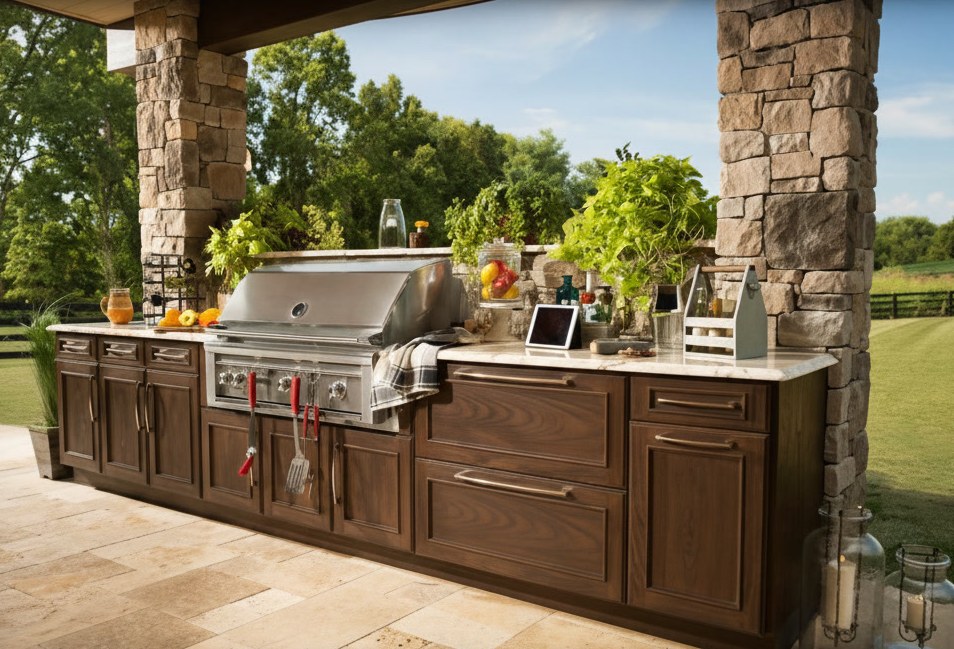
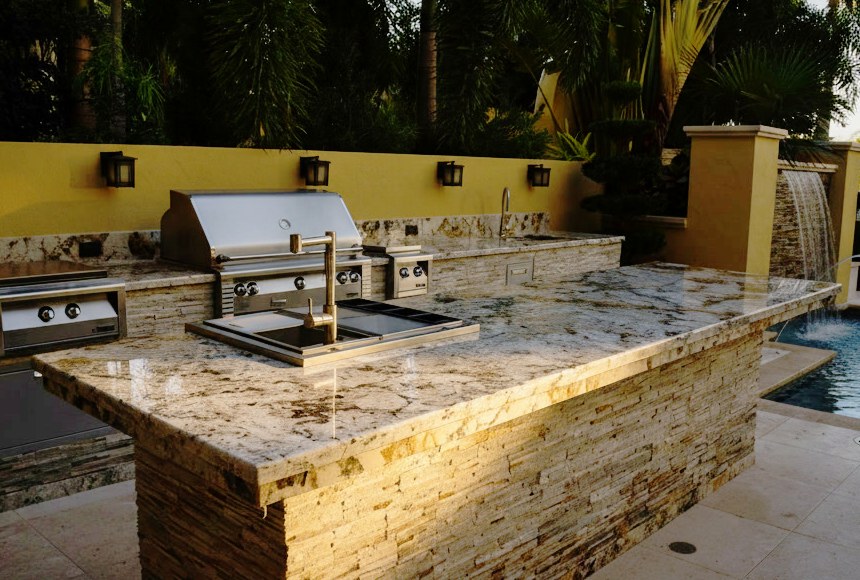
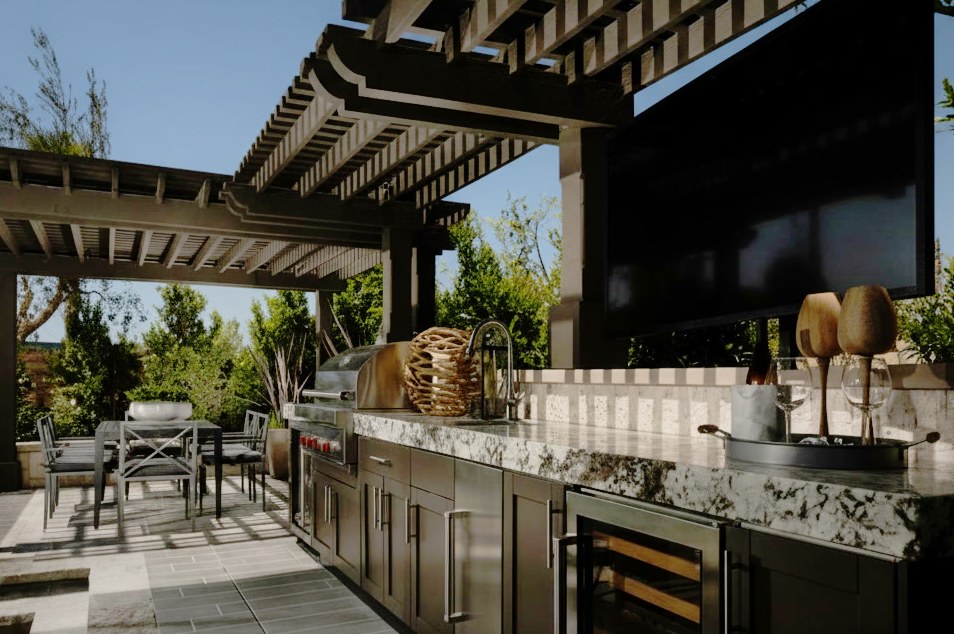
An outdoor kitchen is priced differently not because it is "more" in absolute terms, but because it contains other things: a barbecue or wood-fired oven with a refractory stone cooking chamber, a solid, level base, a worktop chosen for the open air (usually granite, quartzite or sintered stone), and often a roof. The structure is in refractory stone blocks; steel is for grills, the sink and technical parts. In the oven, the dome and the arch are in refractory bricks, set according to the refractory manufacturer's instructions; all the structure around them is dry-fitted. Outdoors the dry-fitted structure shows its clearest advantage: with no mortar or screed, water is not trapped in the materials that frost destroys. The modules are described on the pages about the outdoor masonry kitchen, the barbecue and the wood-fired oven.
Sub-item: installation and distance. Michelessi installs with its own team: the kitchen is assembled by the same people who prepared it in the workshop. In Aprilia, Rome, Latina and across Lazio the site survey is free and installation is part of the quote. We install with our own team throughout Italy and follow projects abroad too: outside Lazio, transport and the team's travel are calculated on the destination and shown as a separate item.