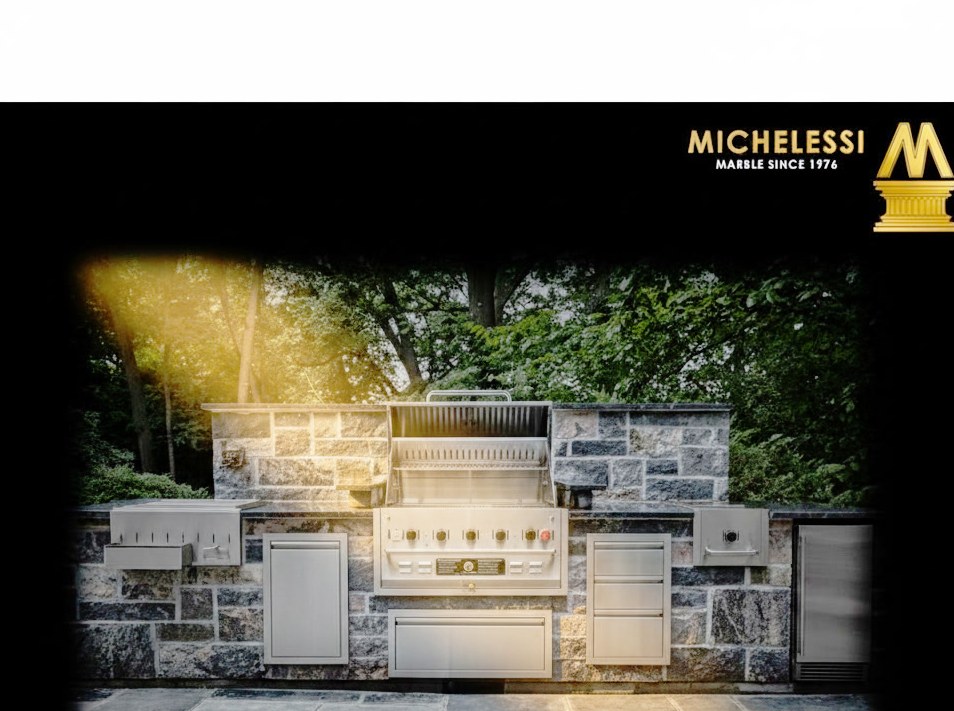
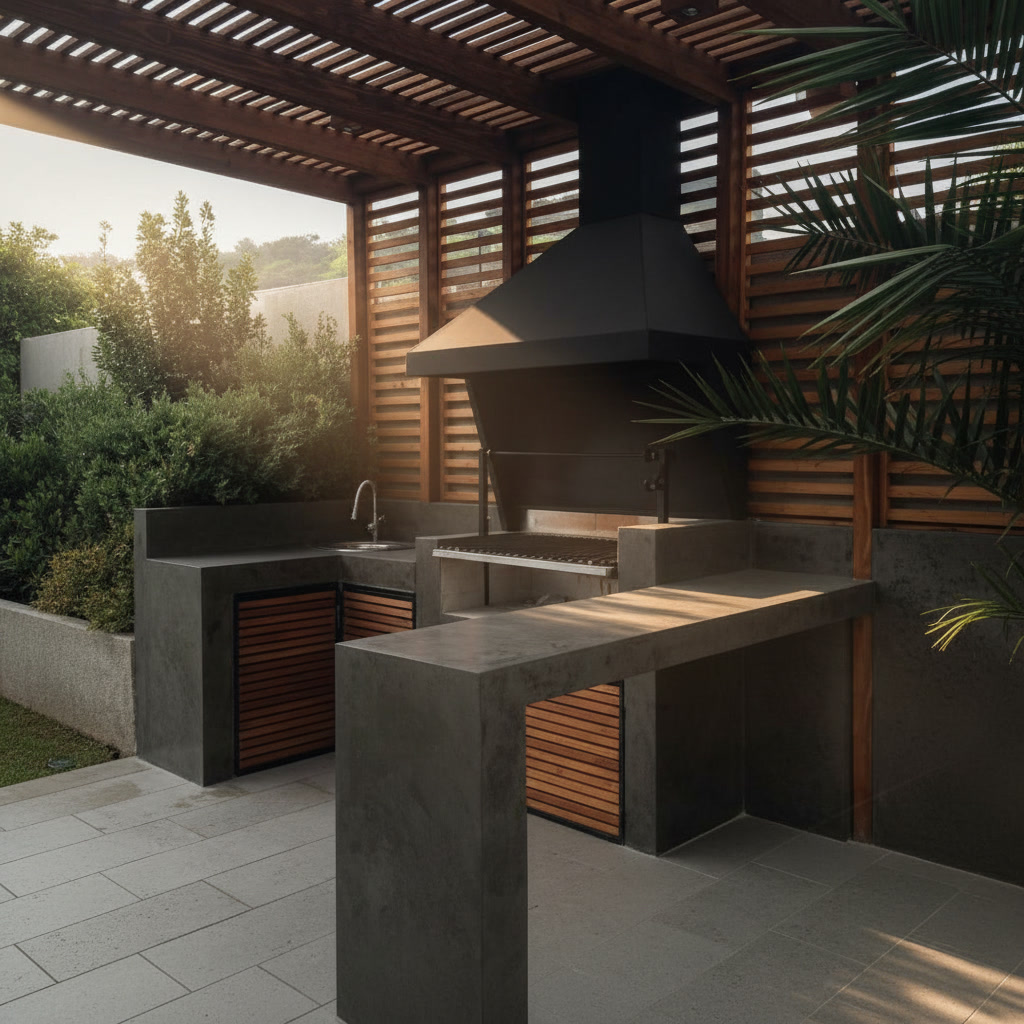
There is no single right stone for a kitchen: there is the right stone for each part of the kitchen. The worktop asks for resistance to stains and hot pans; the structure asks for stability under heat and water; outdoors everything has to stand up to rain, sun and frost.
| Stone | Where it goes | Indoors | Outdoors | Worth knowing |
|---|
| Marble (Calacatta, Carrara, Statuario, Nero Marquina, Botticino) | Worktop, upstand, integrated sink, cladding | Yes | With care | Dislikes acids and hot pans; outdoors it dislikes frost and sudden changes of temperature |
| Travertine | Worktop, cladding, flooring | Yes | Yes | The stone of Rome; needs filling and sealing |
| Granite and quartzite | Worktop | Yes | Yes | Hard, compact stones; suited to outdoor kitchens too |
| Lava stone | Worktop, exposed side panels | Yes | Yes | Volcanic rock from Mount Etna, left rough-cut or glazed; for the structure we use refractory blocks |
| Sintered stone (Dekton, Laminam) | Worktop | Yes | Yes | Not a natural stone: a slab compacted at high temperature |
| Refractory stone | Structure; cooking chamber of ovens and barbecues | Yes | Yes | Withstands temperatures above 538 °C for long periods (ASTM C71); manufacturers declare resistance beyond 1,000 °C; laid dry, with no mortar to hold water |
Marble: the worktop of the stone kitchen
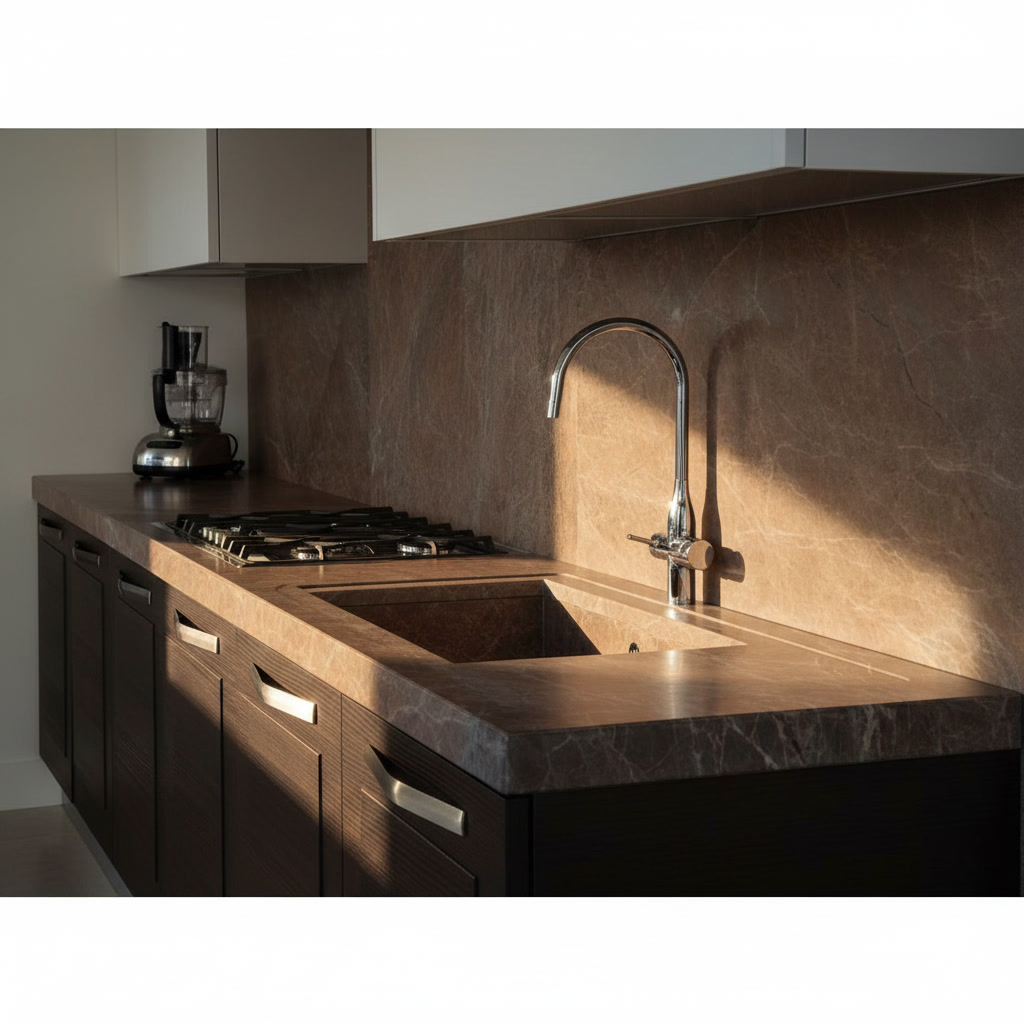
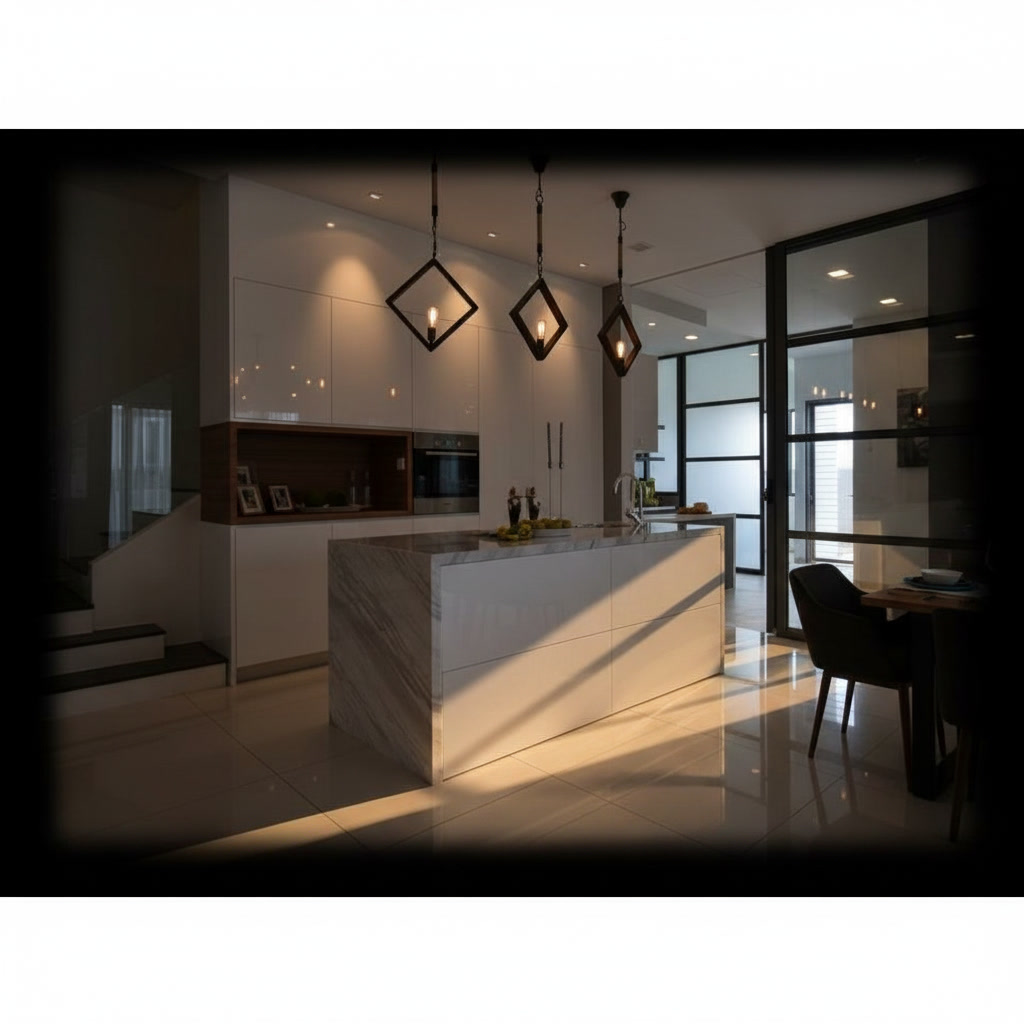
Marble is the stone of the worktop. Michelessi chooses the slabs one by one and cuts them in the Aprilia workshop on numerically controlled machines, finishing by hand. Calacatta, with grey and gold veins on a white ground, is the choice for light, modern kitchens; Nero Marquina, black with white veins, gives character to dark kitchens or to contrasts with wood; Carrara, Statuario and Botticino complete the range, described in the marbles section.
Marble calls for honesty. It is a calcareous stone: it dislikes acids (lemon, vinegar, wine), it stains if spills are not wiped at once, and it suffers from boiling pans set straight on the surface. The care, step by step, is further down, in the section on how a stone kitchen is cleaned.
Travertine: the stone of Rome
Travertine is the stone of Rome's monuments and of the farmhouses of Lazio. It has a warm colour, from ivory white to walnut, and a porous surface that is filled and sealed. In the kitchen it suits the worktop of rustic and country kitchens, the cladding and the floor, indoors and out.
Granite and quartzite: the hard stones
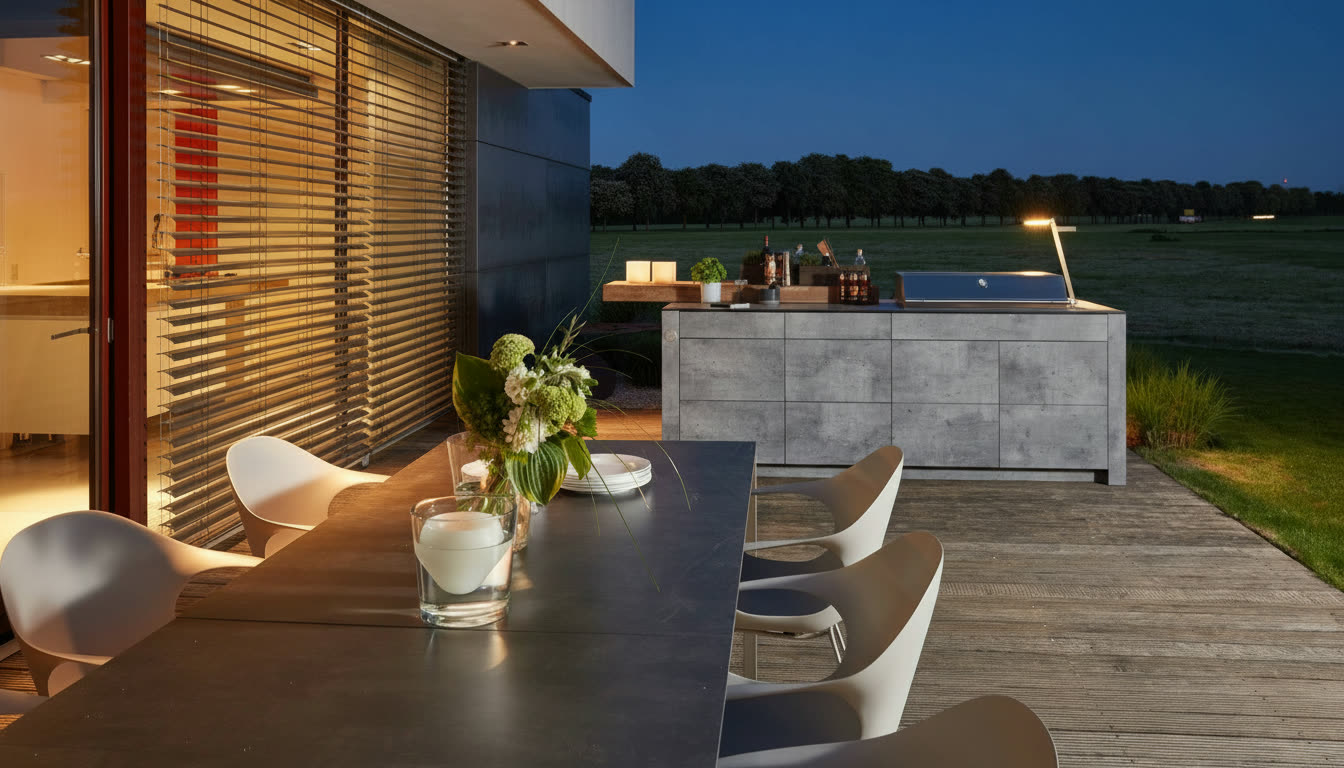
Granite and quartzite are hard, compact natural stones. They stand up to hot pans, knives and acids better than marble, and outdoors they take rain, sun and frost with little care. They are the worktop we recommend for outdoor kitchens and for those who cook a great deal. You will find them among the natural stones of the workshop.
Lava stone, Lecce stone, soapstone
"Lava stone kitchen" is a frequent search. Lava stone is the volcanic rock of Mount Etna: in Sicily it is used for worktops that are often glazed and painted by hand. Michelessi works it rough-cut for the exposed side panels of outdoor kitchens, or glazed for a coloured worktop. Soapstone, dark grey with green tones, is the stone of stoves: Michelessi offers it as slabs and blocks made to measure for interiors. We work Lecce stone, a pale limestone from Salento, mainly for floors. For the structure that stands up to the fire of a barbecue or an oven, however, the choice remains blocks of refractory stone.
Sintered stone: when natural stone is not enough
Sintered stone (Dekton, Laminam) is not a quarried stone: it is a slab of minerals compacted at high temperature. It absorbs very little, copes well with acids and with the heat of pans, and is used outdoors too.
Refractory stone: the structure
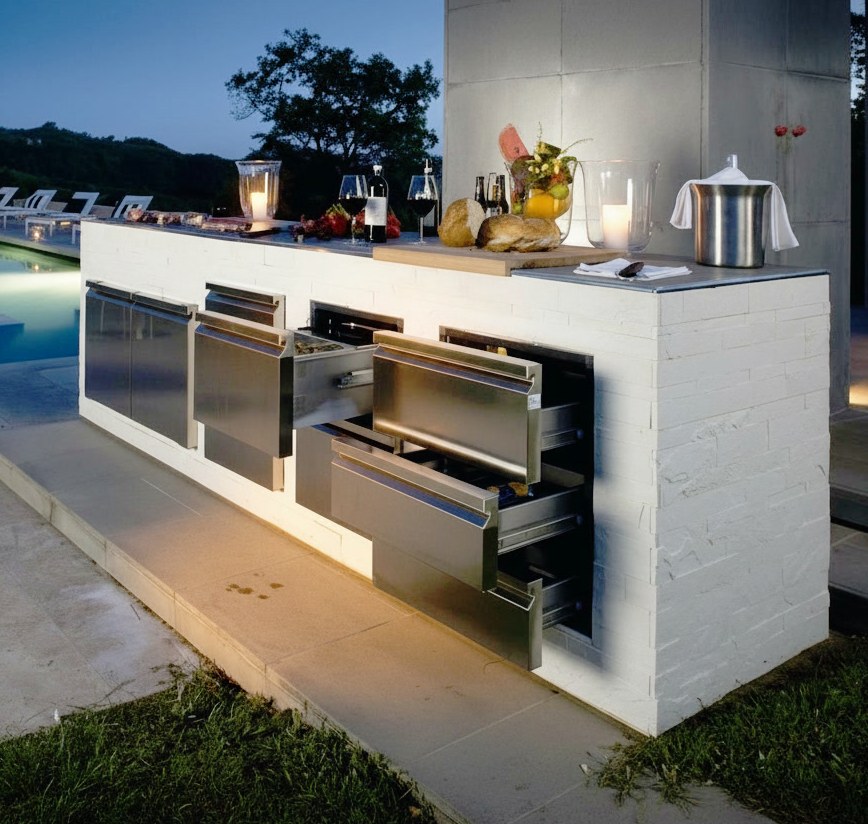
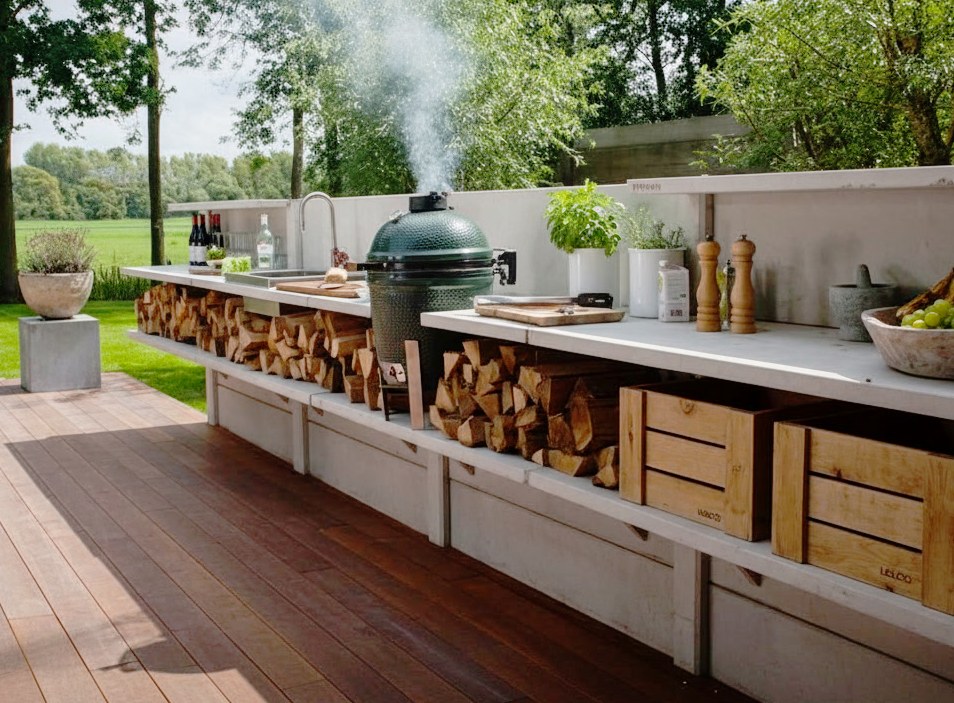
Refractory stone is a non-metallic material that withstands temperatures above 538 °C for long periods (ASTM C71 standard): manufacturers declare resistance beyond 1,000 °C; aluminosilicate oven refractories reach 1,100-1,200 °C. It is the stone of bread and pizza ovens: it heats slowly, stores the heat and gives it back evenly. Michelessi brings it from the oven to the whole kitchen: the blocks, fitted together dry, form the side walls, bases, niches and the body of barbecues and ovens. The cooking chamber of the barbecue, and the dome and arch of the oven, are in refractory bricks, laid according to the refractory manufacturer's instructions; the whole structure around them is dry-fitted.
Two clarifications. Even refractory stone is heated gradually at the first firings, as oven and barbecue manufacturers prescribe. And we do not claim that the stone is immune to everything: the advantage of the dry structure is that there are no mortars, screeds or renders, which are the materials that hold water and that frost splits. If a block chips after years of use, it slides out and is replaced without touching the others.
One last distinction, for those who search for "refractory stone kitchen": the refractory stone sold for pizza is the same kind of material, but a different thing. It is a plate, often of cordierite or fireclay, that is set in a home oven to store heat and cook the base. Ours are building blocks: they are not set inside an oven, they are fitted dry into a structure.