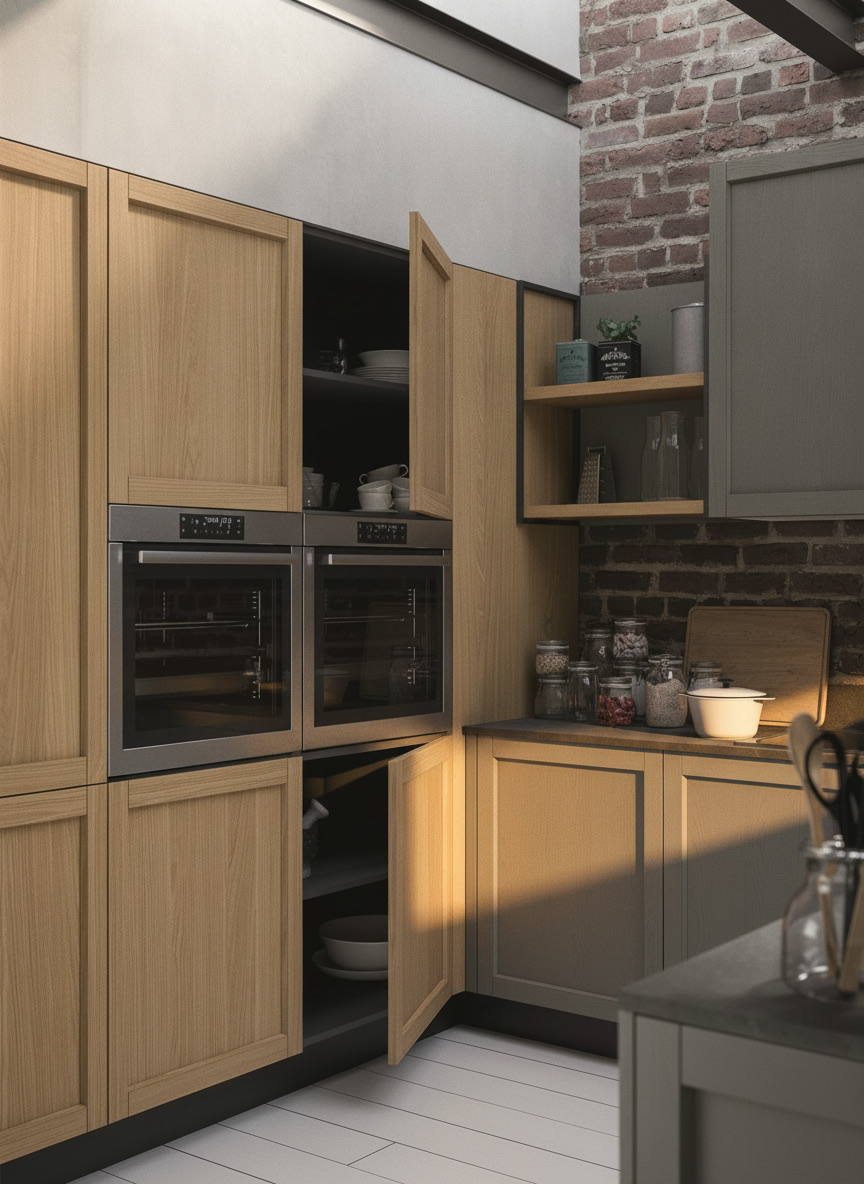
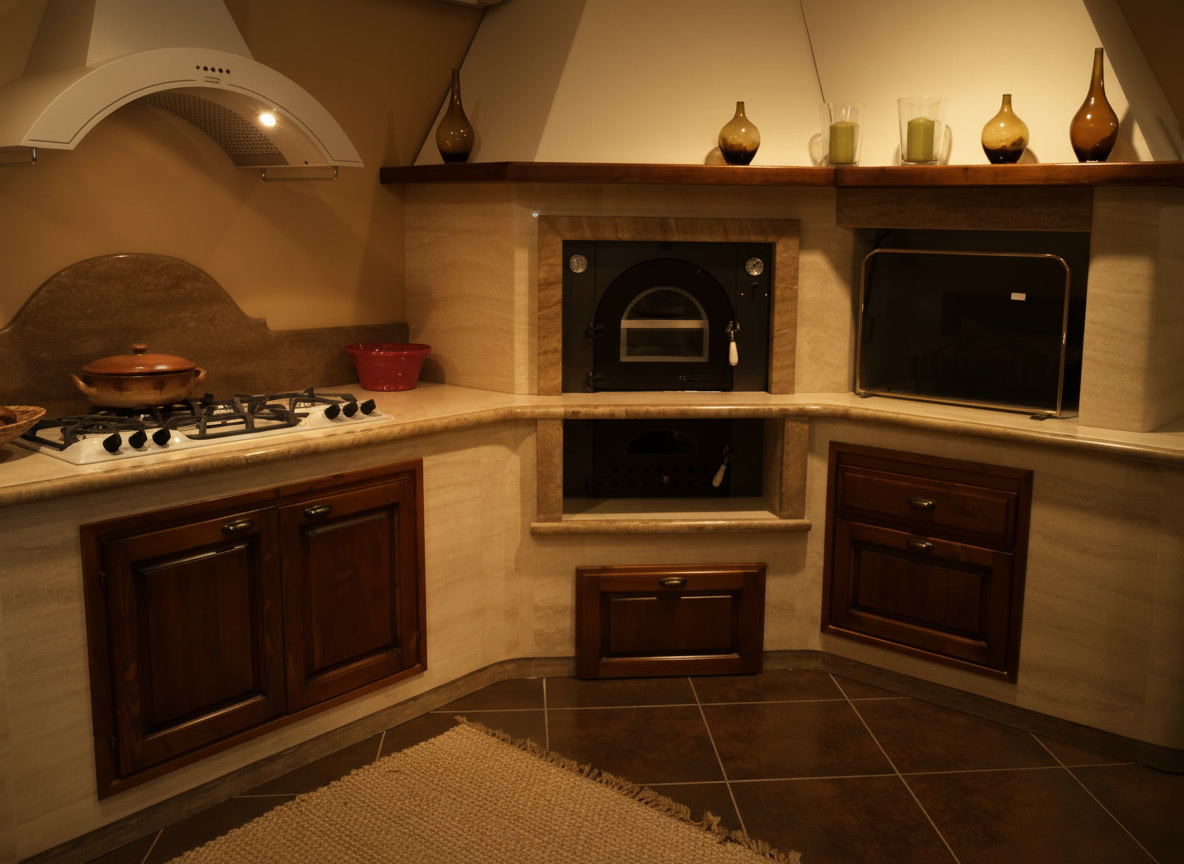
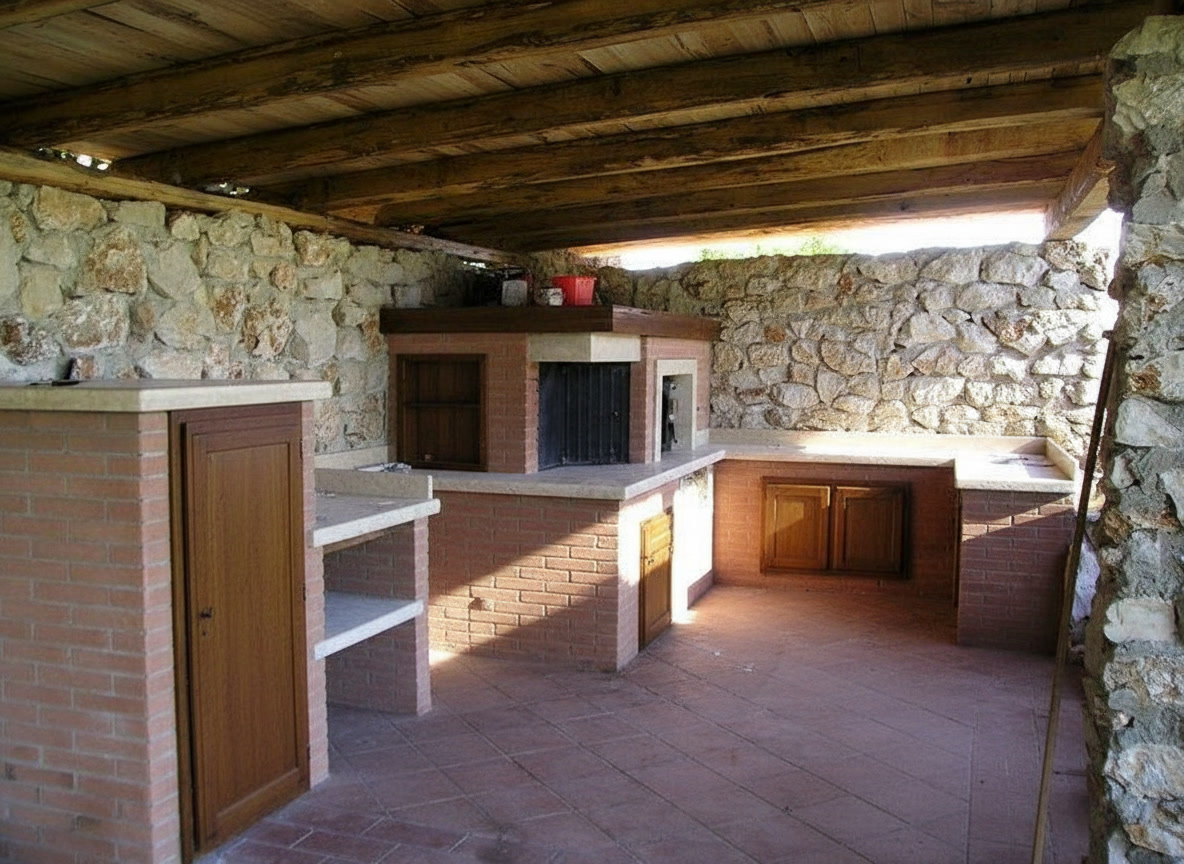
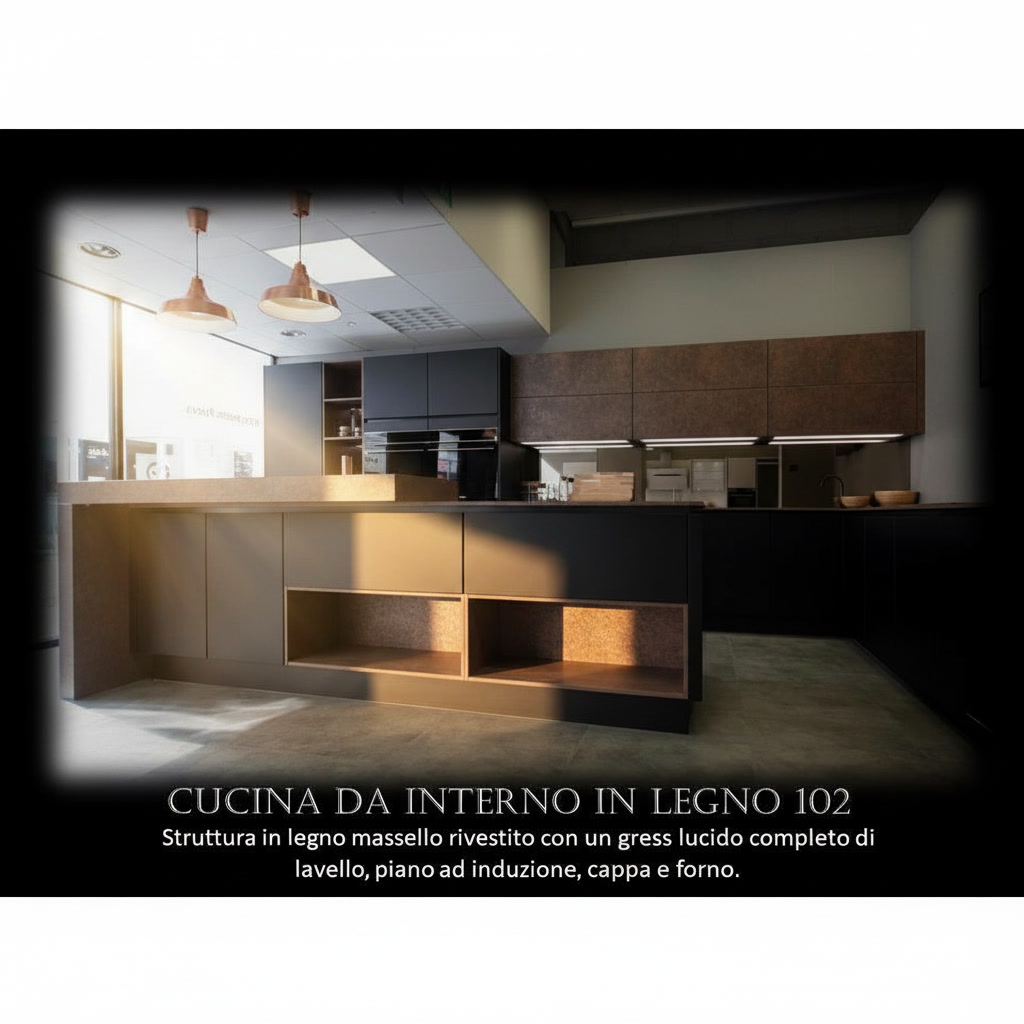
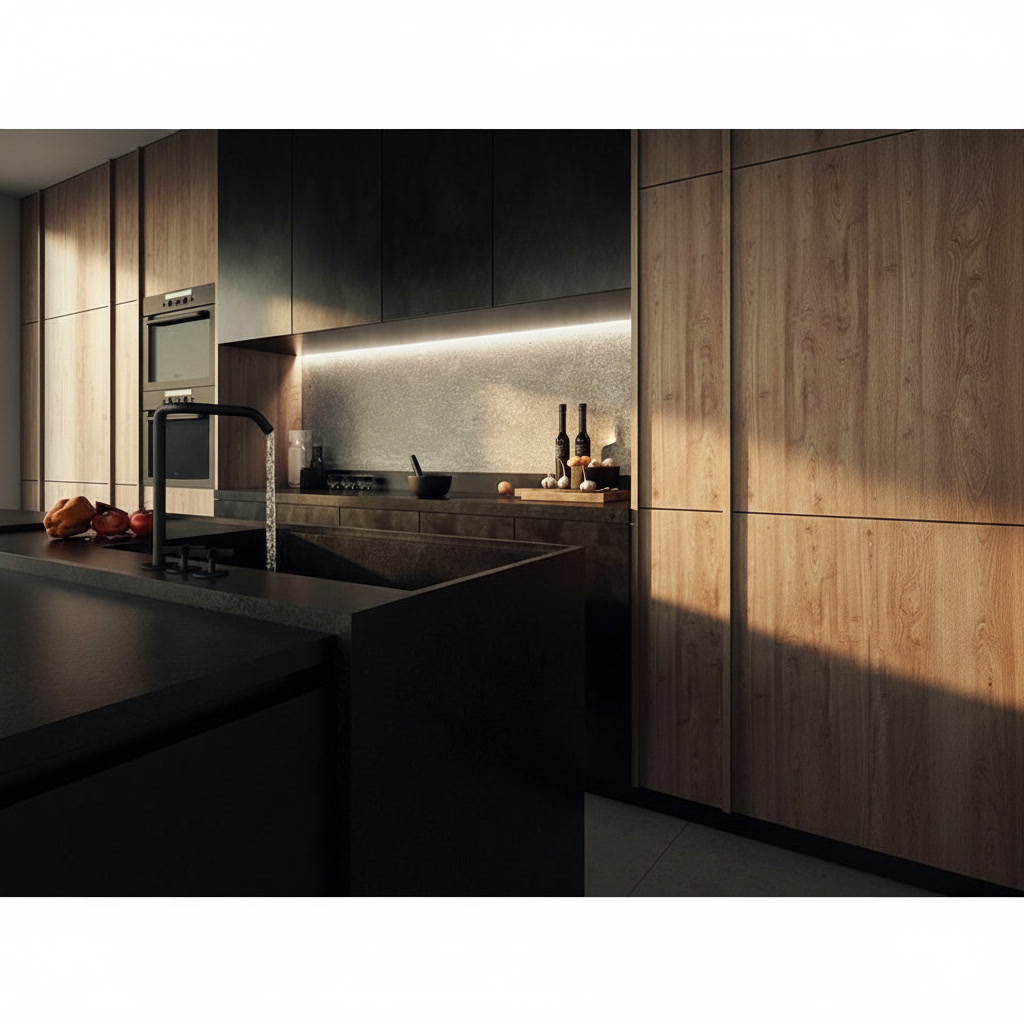
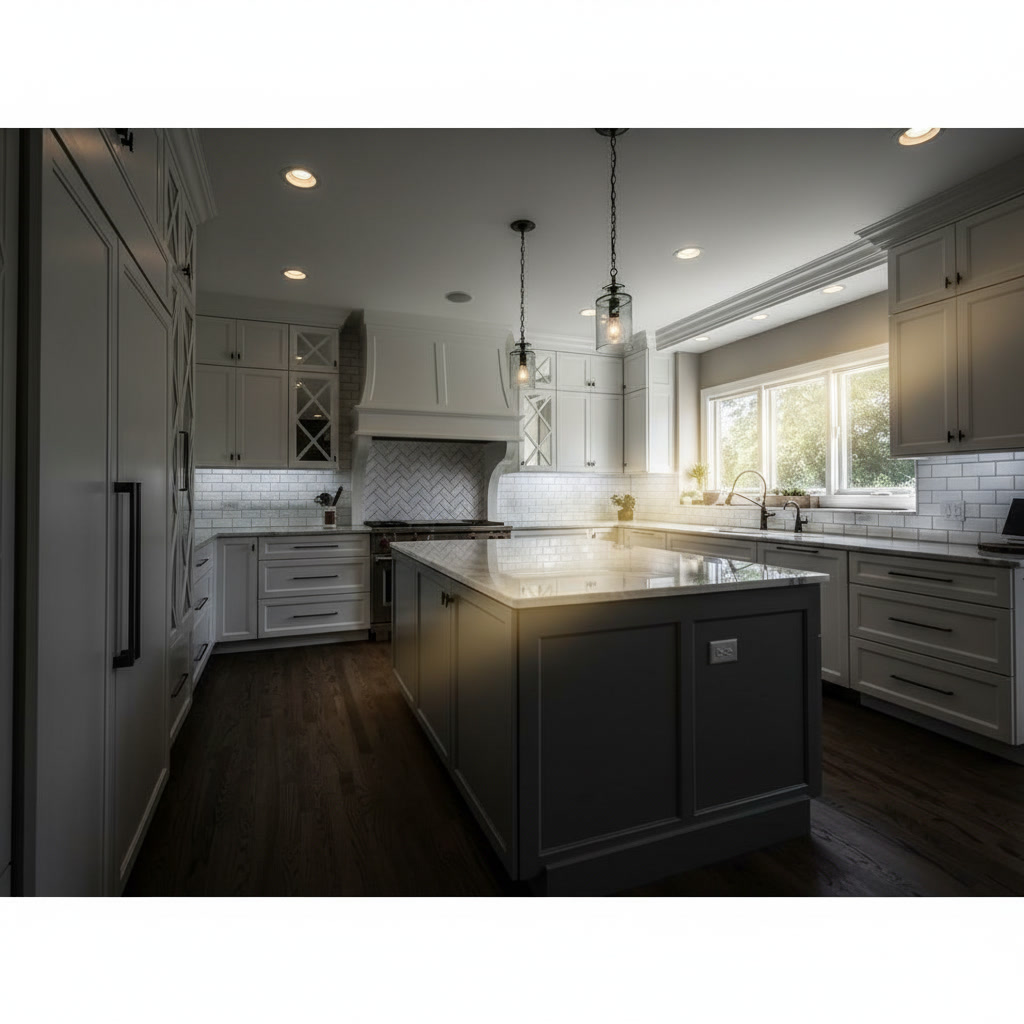
Rustic, country, classic, Provençal, shabby, Mediterranean, Sicilian, arte povera: eight ways of finishing the same kitchen. The refractory stone structure stays the same; what changes is the colour of the doors, the stone of the worktop, the splashback and the fittings. Below you will find what sets each style apart.
Rustic
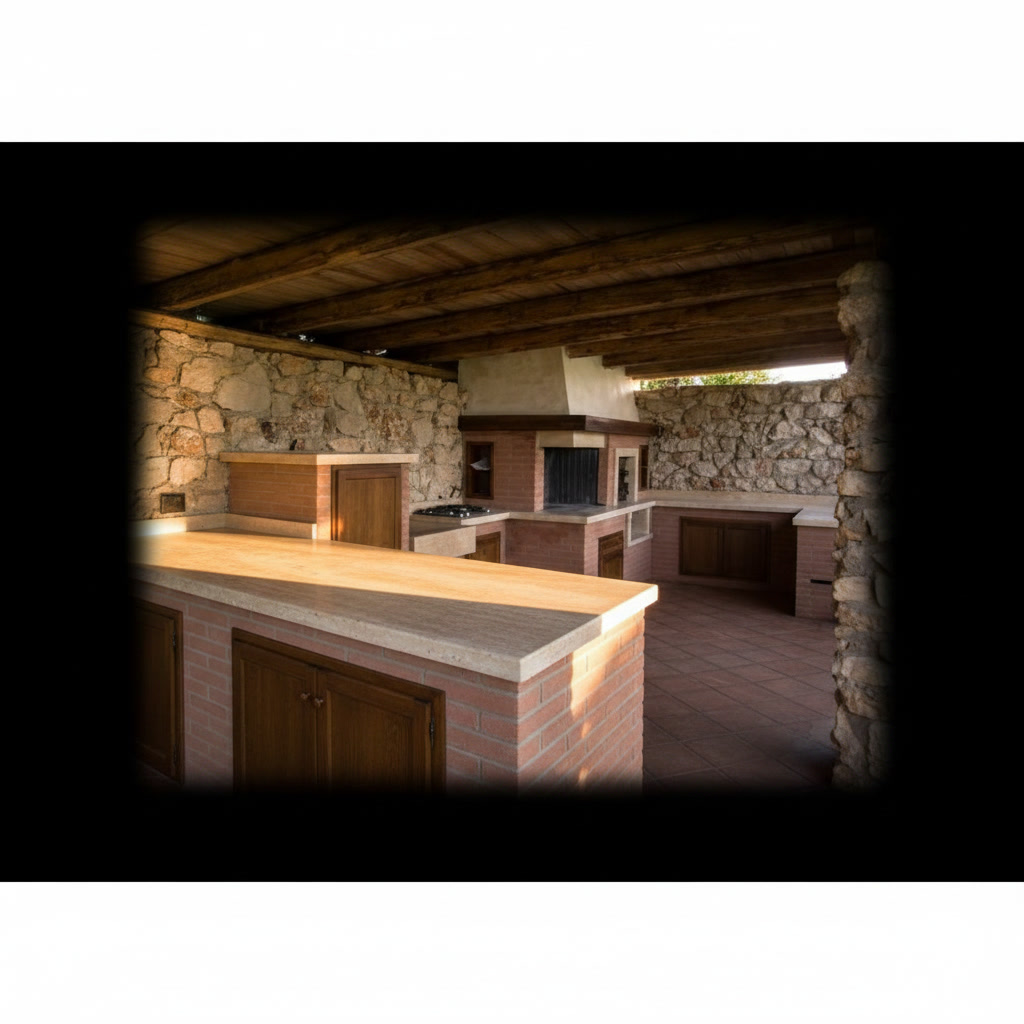
The rustic masonry kitchen is the most tactile: exposed stone or a plain lime wash, a travertine worktop, knotty chestnut or oak doors with iron knobs, canvas curtains, a chimney hood with a beam. The colours are those of the materials, with no opaque paint. It is the style of the country house and the restored farmhouse.
Country
The country masonry kitchen is the rustic kitchen tamed: doors painted white, cream, sage green or powder blue, a white marble worktop, pale majolica on the splashback, shelves instead of wall units.
Classic
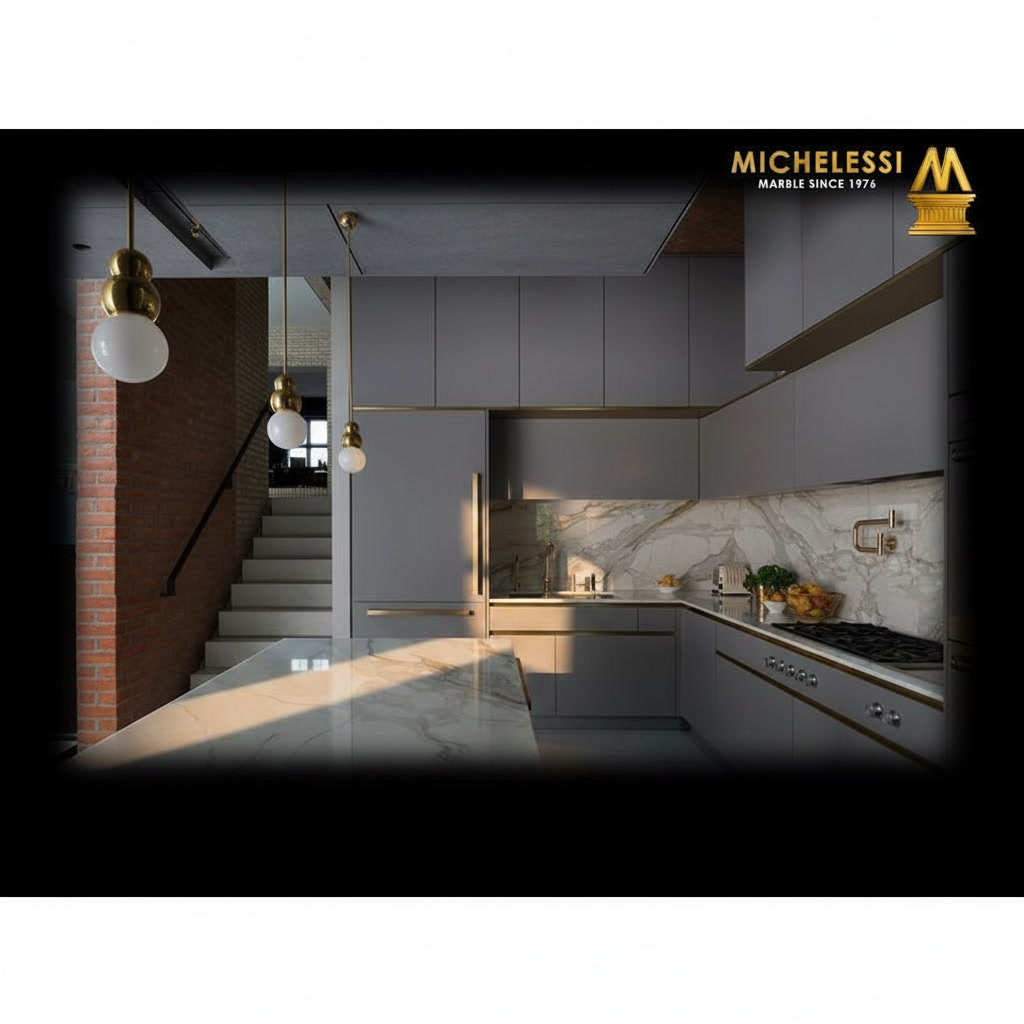
The classic masonry kitchen is ordered and symmetrical: framed doors with raised panels, cornices, tall units for oven and fridge, a Botticino or Calacatta worktop, a central hood that acts as the axis. Compared with the rustic kitchen it has smoother surfaces and a design that holds its own in a town house too.
Provençal and shabby
Provençal is the country style of the south of France: limed wood, lavender and ochre, terracotta tiles, wrought iron. Shabby pushes towards worn white and distressed doors. In both cases the pale stone structure is already the right colour: it needs only a lime wash, or to be left exposed.
Mediterranean and Sicilian
The Mediterranean masonry kitchen is white and blue, with arched niches and open shelving; the Sicilian adds hand-painted majolica on the splashback and the fronts, with a worktop in marble or dark granite and a stone upstand beneath to protect it from water.
Arte povera and antique
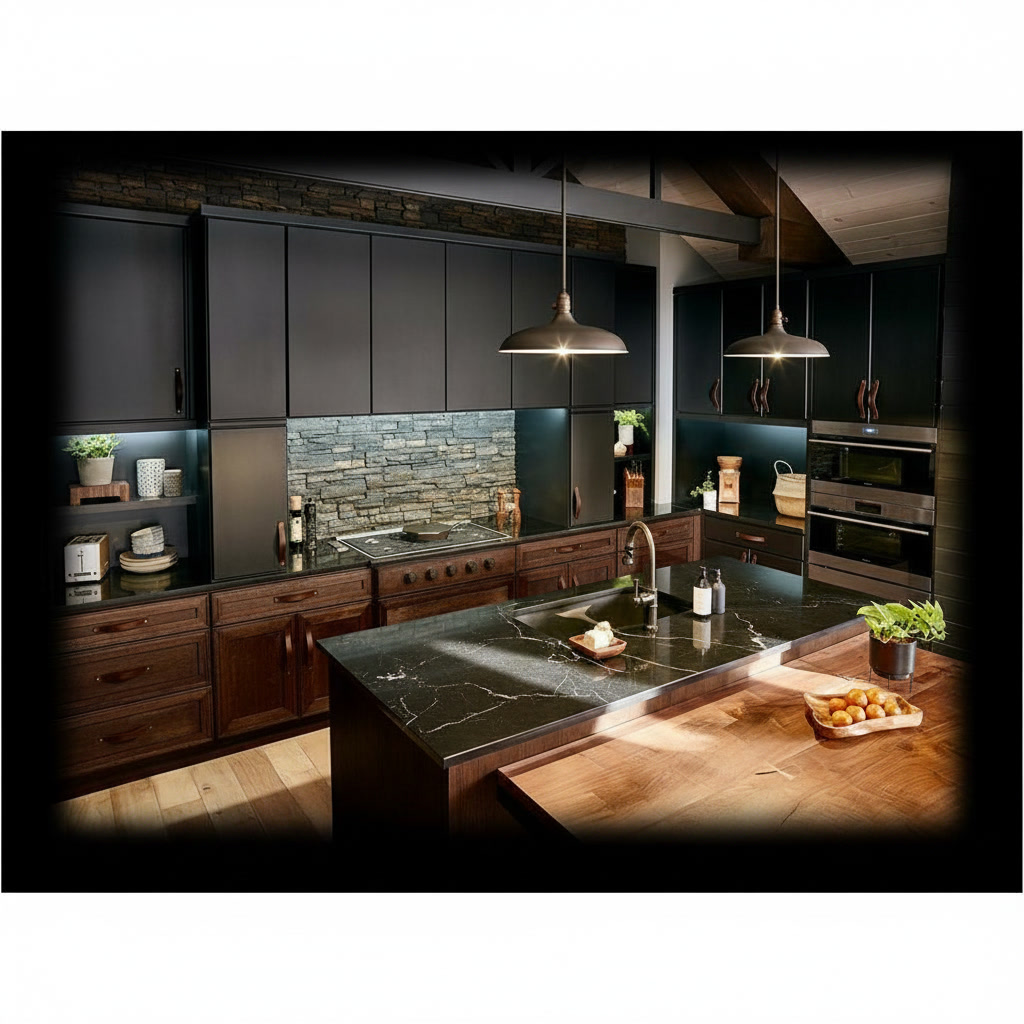
Arte povera means dark solid wood, wax and iron, like peasant furniture: chestnut or walnut plank doors, deep drawers, a bread chest. The "antique" kitchen is the same idea with salvaged pieces: an old marble slab, a single-block stone sink, exposed stone.
With exposed brick
The exposed-brick look is obtained by leaving the refractory stone blocks visible, in the pale, warm variety. We do not build brick walls: the structure stays dry, with no cement mortar at work, and the exposed stone is already the finish.